
What to Do When Math Homework Breaks Down
📉 When Homework Turns Into a Meltdown
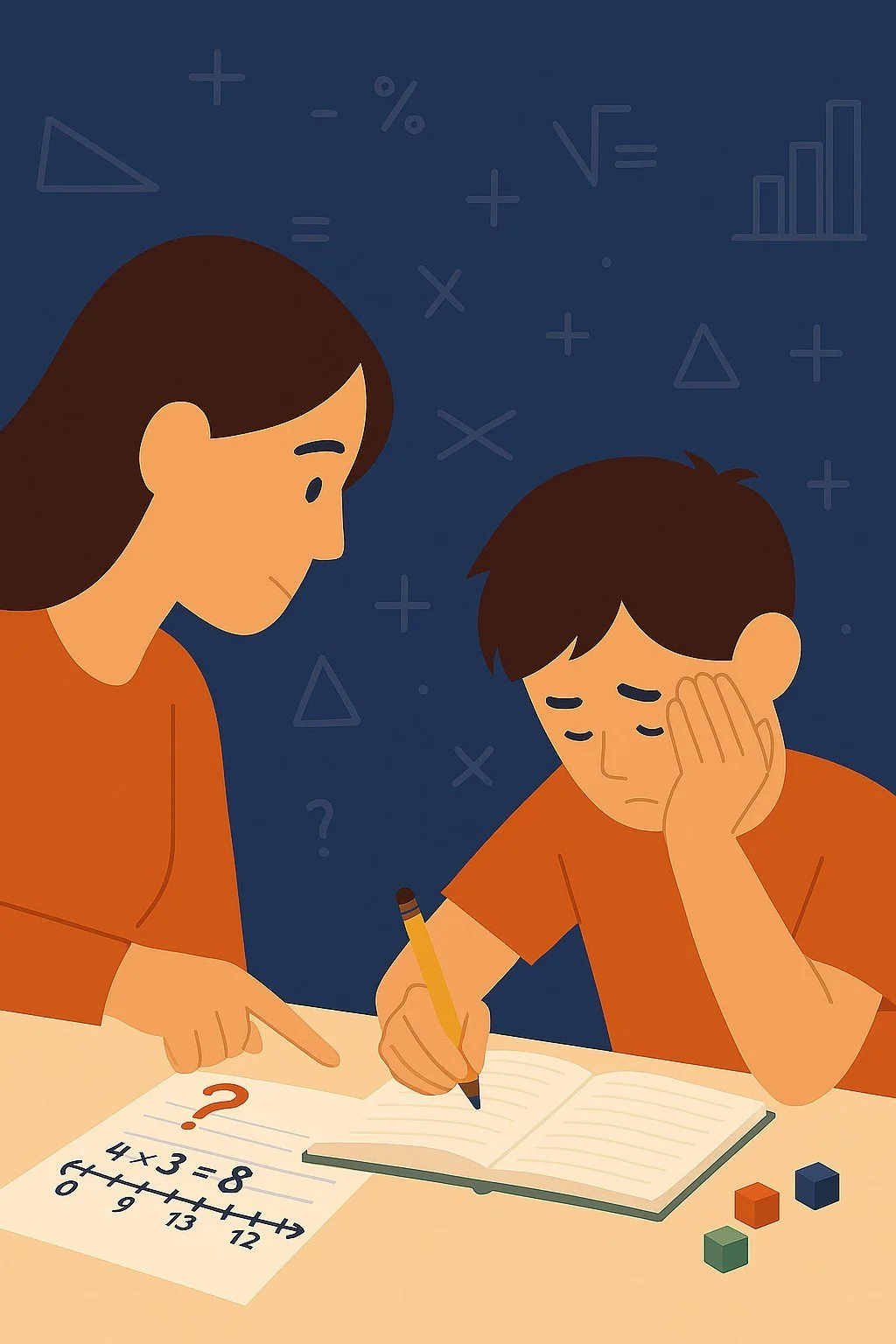
It starts with a sigh. Then a scribble. Then silence. Your child stares at the math worksheet like it’s written in another language. You offer help. They push back. You explain again. They shut down.
This isn’t just a homework hiccup—it’s a breakdown. And it’s not about the math.
When math collapses at home, it’s usually because the emotional scaffolding underneath the learning has cracked. Your child isn’t just confused—they’re overwhelmed, ashamed, or afraid. And no amount of repetition will fix that.
So what do you do when math breaks down?
You stop reteaching the steps. You start rebuilding trust.
🧠 Why Familiar Problems Still Cause Frustration
Most kids aren’t struggling because they’re incapable. They’re struggling because the rules they were taught don’t feel safe or logical anymore.
Here’s what’s really going on:
- They’ve memorized steps without understanding the concept. One missing link, and the whole thing collapses.
- They’d rather freeze than risk being wrong.
- Past confusion creates present anxiety. Even familiar problems feel threatening.
This isn’t laziness. It’s a nervous system response. And it’s more common than most parents realize.
What is needed is emotional clarity—so your child doesn’t just remember what to do, they understand why it works.
🔍 Spotting the Signals of a Breakdown
Not every breakdown looks dramatic. Some are quiet. Some are disguised as avoidance or perfectionism.
If your child keeps saying “I don’t get it,” they may be overwhelmed, not clueless. If they erase constantly, they’re likely afraid of being wrong. If they rush through problems, they’re trying to escape discomfort. If they avoid homework altogether, they may associate math with shame. And if they ask for help but then reject it, they’re seeking connection—not correction.
These aren’t discipline issues. They’re emotional cues. And they need a different kind of response.
🛠️ What Actually Helps (and What Doesn’t)
Let’s reframe your role. You’re not the fixer. You’re the emotional architect.
Start by naming the emotion. Say, “This looks frustrating. Want to take a breath together?” That helps your child feel seen—and safe.
Don’t repeat the same explanation louder. If it didn’t land the first time, it won’t land the fifth. Repetition without reframing reinforces confusion.
Zoom out to the big idea. Ask, “What’s this problem trying to figure out?” That reconnects them to meaning, not just mechanics.
Avoid saying, “You already learned this.” That triggers shame. Instead, try, “Let’s look at it with fresh eyes.”
Use visual anchors. Sketch it. Block it. Build it. Visuals reduce cognitive load and restore clarity.
Teacher Bob Math uses these same strategies—reframing rules visually, emotionally, and logically—so your child can rebuild confidence without starting from scratch.
🧩 A Real-World Reframe: The “Borrowing” Breakdown
Your child is stuck on 402 – 187. They try to subtract 7 from 2. Panic. You say, “Just borrow!” But they freeze.
Here’s how to rebuild:
Start by zooming out. Say, “We’re finding the difference between 402 and 187.”
Then visualize it. Draw 402 as 4 hundreds, 0 tens, and 2 ones.
Rebuild the rule. Trade one hundred for 10 tens. Then one ten for 10 ones. Now subtract.
Name the emotion. Say, “This part is tricky. It’s okay to pause.”
Suddenly, it’s not about borrowing. It’s about understanding place value. Anchor in logic, not memorization.
🧘♀️ Create a Math Calm Corner
Environment matters. A “math calm corner” can reset the emotional tone.
Include soft lighting or natural light. Add a visual anchor board with number lines or place value charts. Use a “math feelings” scale with emojis. Set a timer for short work bursts. Create a reset ritual—deep breath, stretch, or short walk.
This isn’t coddling. It’s clarity. It helps your child re-enter math with a regulated nervous system.
🗣️ What Parents Say
“I stopped correcting and started listening. Everything changed.”
— Jenna, parent of a 4th grader
“We built a math calm corner. Now she asks to go there when she feels stuck.”
— Marcus, homeschool dad
“I didn’t need to reteach—I just needed to help her feel safe enough to try again.”
— Priya, afterschool tutor
These aren’t flukes. They’re signals that emotional clarity works. And they’re exactly what Teacher Bob Math is designed to deliver. Check out what parents say about Teacher Bob Math courses.
---
🧭 From Rescuer to Reflector
When math breaks down, your instinct might be to fix it. But what your child needs is a calm mirror.
Instead of saying, “Let me show you,” try, “What do you notice?”
Instead of “That’s not right,” say, “Let’s look at that part again together.”
Instead of “You just need to…,” ask, “What’s your brain telling you here?”
Instead of “We’ve done this before,” say, “What feels different about this one?”
This isn’t lowering the bar. It’s raising the trust.
---
🔄 When to Step Back—and When to Step In
Here’s a simple protocol for when things spiral:
Pause the problem. Say, “Let’s take a break.”
Name the emotion. Say, “It’s okay to feel stuck.”
Rebuild the frame. Say, “This isn’t about being perfect. It’s about figuring it out together.”
Re-enter with a new lens. Ask, “Want to draw it out?”
This resets the emotional posture. And that’s where real learning begins.
🧱 Rebuilding Trust, One Rule at a Time
Every math rule is either a brick in their foundation—or a crack in their confidence.
When you help them rebuild a broken rule with clarity and emotional safety, you’re not just fixing homework. You’re restoring trust in their own thinking.
And that’s what sticks.
That’s what Teacher Bob Math is built for.
📋 Parent Checklist: Spotting Breakdown Triggers Early
Does your child rush through problems or avoid them?
Do they erase constantly or freeze mid-problem?
Do they ask for help, then reject it?
Do they say “I don’t get it” even with familiar work?
Do they show signs of emotional shutdown?
If you answered yes to any of these, it’s time to shift from correction to connection. And Teacher Bob Math can help.
🎯 What If Math Felt Like This Every Day?
Imagine a math experience where your child doesn’t dread homework.
Where they feel safe to try, to fail, and to figure things out.
Where every rule makes emotional sense—and every mistake becomes a moment of clarity.
That’s what we build inside Teacher Bob Math:
• Video lessons that explain the why, not just the how
• Printable worksheets that reinforce understanding without overwhelm
• Self-paced structure that fits your family’s rhythm
• Support when you need it, so you’re never stuck or alone
Because when math makes sense, confidence compounds.
👉 Explore Teacher Bob Courses and give your child the kind of math help that actually helps.
For further insight, this peer-reviewed study explores how structured, emotionally supportive parenting can reduce homework anxiety and improve motivation. It connects with the blog’s focus on creating a safe space for learning.
StrugglingWithMathHomework #MathHomeworkHelp #MathFrustration #MathBreakdown #MathSupport #ParentingMath #HomeschoolMath #AfterSchoolSupport #MathConfidence #EmotionalLearning #MathEducation #TeacherBobMath
